



![“Tanning exposes your skin to [ultraviolet (UV)] light, and UV light is a known carcinogen, which means it can alter your DNA,” Biotechnology and biology teacher Gillian Boyd said. “It can change the sequences of DNA bases. The more exposure you have, the more risk you have to develop [skin] cancer.”](https://smhsponyexpress.org/wp-content/uploads/2026/06/IMG_0071-1200x798.jpeg)











![Remakes [and film adaptations of books] are often criticized for being too repetitive and unnecessary.](https://smhsponyexpress.org/wp-content/uploads/2026/06/IMG_0193-1200x558.jpeg)
















The World Health Organization (WHO) declared a public health emergency of international concern as The Democratic Republic of Congo (DRC) and Uganda face another outbreak of the Ebola virus. The DRC’s second-largest outbreak occurred between 2018 and 2020, with 3,481 total cases and 2,299 deaths. The recent epidemic is caused by the Bundibugyo strain. According to The Centers for Disease Control (CDC), “Ebola disease is caused by a group of viruses, known as orthoebolaviruses (formerly ebolavirus). These viruses can cause serious illness that, without treatment, can cause death.”
Highly effective vaccinations and antibody treatments for the disease were developed specifically for the Zaire strain that caused the outbreak in 2018. With death numbers expected to rise, the WHO estimates a vaccine for the Bundibugyo strain that could potentially take six to nine months
Ebola is not airborne; it spreads strictly through direct contact with the bodily fluids of an infected person or contaminated objects. Individuals are only contagious once they become symptomatic. Early symptoms include fever, fatigue, muscle pain, headaches, sore throats and in worst cases, internal and external bleeding.
On May 17, an American working with patients in the Democratic Republic of Congo (DRC) tested positive for the disease and was moved to Germany for further care. He is now in stable condition and is being isolated as he recovers from the disease. While the toll of fatalities and cases increase, people have begun retaliating against medical centers located in Uganda. On May 21, a medical center was attacked in the DRC after family and friends of a young man who was thought to have passed away from the disease were restricted from gathering the body for a proper burial service, according to NBC News. It was reported that the center had projectiles thrown at it and was set on fire.
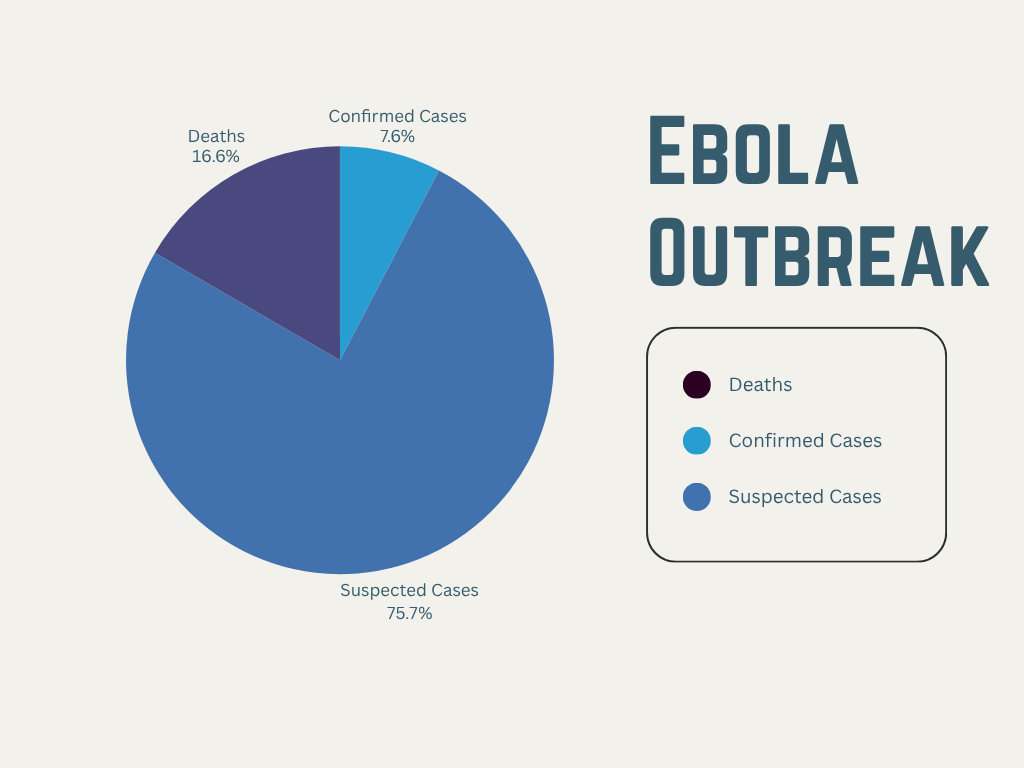
As of May 26, the DRC and Uganda have reported over 1,198 suspected cases, 121 confirmed cases, and 263 deaths, according to the CDC. The appropriate Federal Agencies are taking “proactive public health measures to prevent Ebola from entering the United States.” Those include entry restrictions to those traveling from the DRC or affected areas into the United States. U.S. citizens and lawful permanent residents may only enter through Washington Dulles International Airport for enhanced screening.