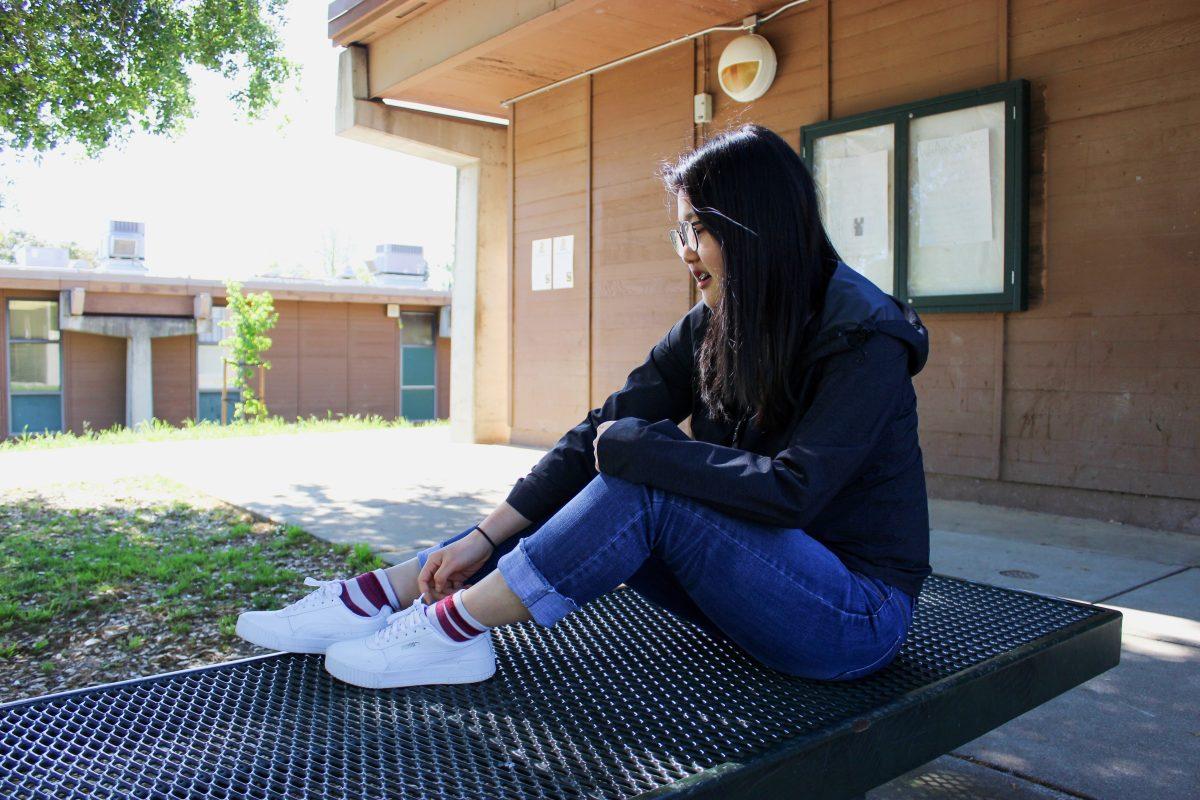
![“Tanning exposes your skin to [ultraviolet (UV)] light, and UV light is a known carcinogen, which means it can alter your DNA,” Biotechnology and biology teacher Gillian Boyd said. “It can change the sequences of DNA bases. The more exposure you have, the more risk you have to develop [skin] cancer.”](https://smhsponyexpress.org/wp-content/uploads/2026/06/IMG_0071-1200x798.jpeg)








![Remakes [and film adaptations of books] are often criticized for being too repetitive and unnecessary.](https://smhsponyexpress.org/wp-content/uploads/2026/06/IMG_0193-1200x558.jpeg)












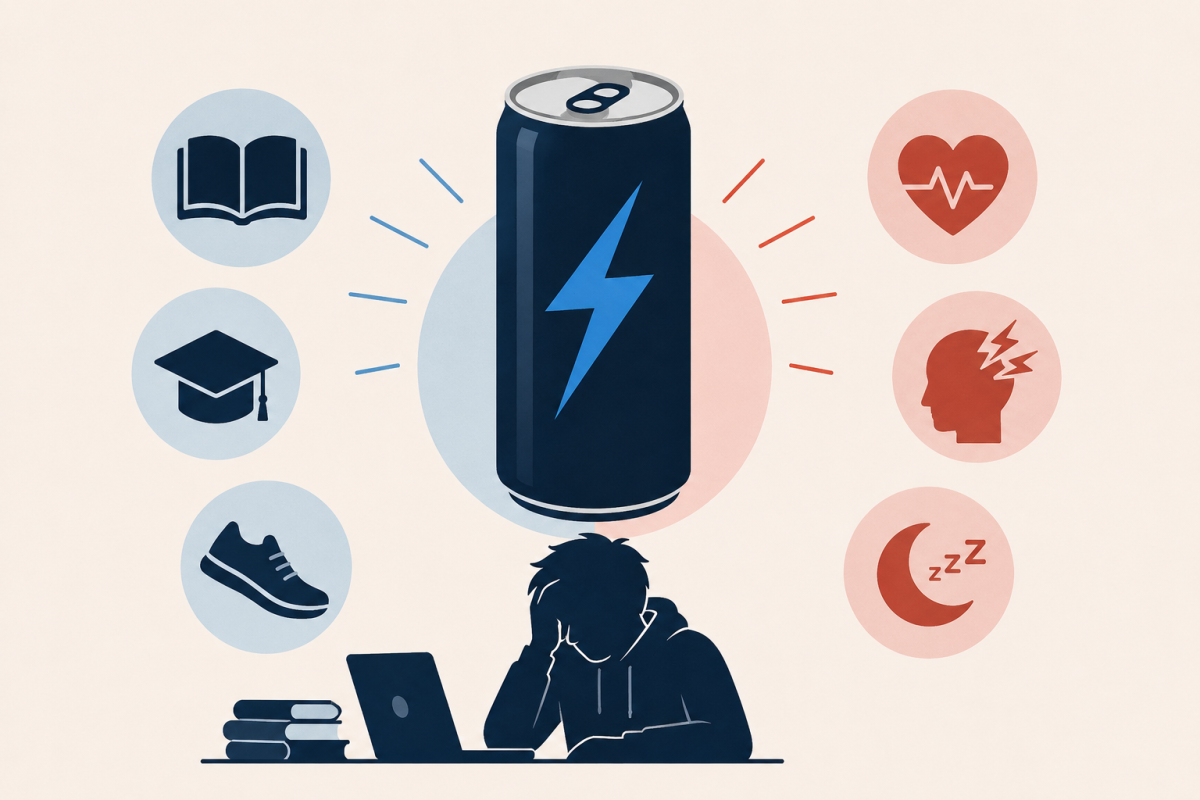
Recently energy drink reliance has become more common among high school students. Students typically drink energy drinks to stay awake during school, finish homework or keep up with busy schedules that include sports, jobs and other activities. Some students say they drink them in the morning before school, while others use them later in the day when they feel tired or need extra focus. Energy drinks can be found in gas stations, grocery stores and convenience stores which makes them easily accessible to teenagers.
“I wake up and I drink energy drinks so I can lock in on my work and that my mind is not all over the place,” an anonymous San Marin High School student said.
Energy drinks usually contain high amounts of caffeine and sugar. Caffeine can affect sleep patterns, attention span, and teenagers’ behavior especially when it is consumed in large amounts and drunk a lot throughout the day. Teenagers are also more sensitive to caffeine when compared to adults due to their growing bodies. This means that they can experience stronger effects from the same amount. Even one energy drink can contain a large portion of the recommended daily caffeine limit for young people, depending on the brand and size.
High school students often feel tired during the school day, especially in the morning or after lunch. Students state that they do not get enough sleep at night due to homework, early school start times, before/after school sports, jobs, or spending time on their phone late at night.
Due to this, students rely on energy drinks to help them pay attention, stay awake during class, and get through after-school activities.
“I’m always so tired in the morning from school,” sophomore Dani Seiler said. “I just kinda drink them to wake me up”.
Doctors and medical organizations warn that energy drinks can have strong and sometimes negative effects on the body, especially for teenagers. Energy drinks can cause side effects such as an increase in heart rate, headaches, trouble sleeping, anxiety and nervousness. These effects can vary depending on how much caffeine a person consumes, but they can be stronger in teenagers because their bodies are still developing. Mixing energy drinks with other things that have caffeine like soda and coffee can increase the risk of consuming too much caffeine in a small amount of time.
“There are times where my heart starts beating faster and I’m getting anxious easier because of [the caffeine],” Seiler said.
Daily use of excessive caffeine can lead to the body building up a tolerance and needing to consume more and more caffeine to get the same effect, which can all in all lead to increased usage. This is called caffeine tolerance. Where the body becomes used to a certain amount of caffeine and responds less strongly. Regular caffeine can lead the body to depend on caffeine consumption to feel “normal.” When someone who consumes caffeine regularly suddenly stops, they might feel withdrawal symptoms such as headaches, tiredness and difficulty concentrating.
“I’m addicted and I can’t stop, “ Anonymous said. “Two doesn’t do enough for me.”