
![“Tanning exposes your skin to [ultraviolet (UV)] light, and UV light is a known carcinogen, which means it can alter your DNA,” Biotechnology and biology teacher Gillian Boyd said. “It can change the sequences of DNA bases. The more exposure you have, the more risk you have to develop [skin] cancer.”](https://smhsponyexpress.org/wp-content/uploads/2026/06/IMG_0071-1200x798.jpeg)









![Remakes [and film adaptations of books] are often criticized for being too repetitive and unnecessary.](https://smhsponyexpress.org/wp-content/uploads/2026/06/IMG_0193-1200x558.jpeg)








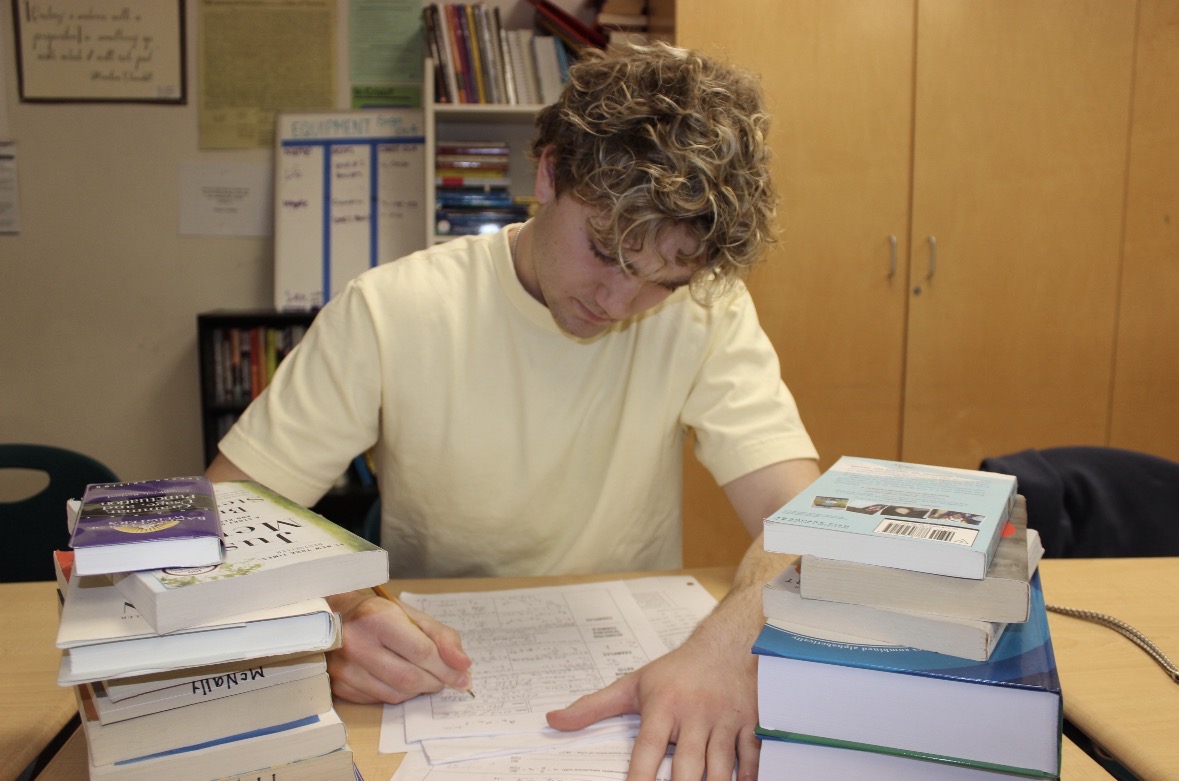
San Marin High School transitioned to Proficiency Based Education (PBE) in 2023, replacing traditional percentages with a 0 to 4 scale. I experienced this shift in eighth grade, so I went into high school with some understanding of PBE, but never fully grasped it because not every middle school was implementing this change and there was little direction on how it compared with the past grading system. Under this model, we are assessed on specific topics rather than percentages. It features a rubric with multiple standards and key concepts that we have to show in our work to get a higher grade. The shift was intended to redefine how we measure learning, but the transition has been difficult. It has its ups and downs, but the negatives outweigh the positives.
The transition to this scale has made it way more difficult to understand what numbers mean in a letter grade. In PBE terms, a 3 out of 4 is often equated to an A-, yet mathematically, it is only 75%, which is a C in the traditional system. The fact that there is no clarification on how this was calculated does not make sense.
Earning a 3 is supposed to be a good thing, as it means hitting all the steps and answers, but somehow, teachers want more from us. I have no idea if I should shoot for a 3, which is the standard, or go “above and beyond” and get a 4 (100%). Getting a 4 is difficult because, on tests, teachers label the most challenging questions as level 4, which require deeper mastery of the unit. Even if I have an understanding of everything in the test, I can only receive a 4 if I apply outside knowledge that was not taught.
This lack of consistency, transparency, and fairness makes the grading system feel less like a tool for learning and more like a source of confusion and stress.
Aeries is the official gradebook software used by the Novato Unified School District. It follows the percentage grading system, so anything below a 60% would be considered an F, but with the shift, Aeries does not coordinate with the PBE system. In most of my classes last year, I was not given a rubric as a way to show me what a 3 represents. In my multimedia class, I had to get a 3.3 for an A-, while for others it was just a 3. I have gotten 3’s and above on multiple learning targets, but have gotten a 2 or below on others, which holds my grade down and makes it difficult for me to bring it back up, since the average grade in that specific category is lower than in the other categories. I have an A in most of my physics categories, but a D in just one category, so my grade gets bumped down to a B. In quizzes, I get more than half correct just to be given a 0.9 or 1.8 out of four because of the PBE system.
It is so frustrating for me to be stuck at a 2.9 for one or more classes and struggle to ask my teachers to possibly bump my grade. When it comes to missing assignments, not every teacher gives credit for late work, making it hard to ask them to fix the missing assignment. If they do, I am always told to email them, but I forget by the end of the day due to stress from other classes. It is a hassle to keep up with a teacher’s grading system and expectations, as my own schedule is already full enough.
After experiencing the shift in the grading system, it feels like the PBE system does not contribute to my growth as a student. Especially because I have very little information on how the PBE system will transfer over to college transcripts. No matter how hard I push myself to get a 4, it feels like my grades do not correspond with what I should actually be getting, and no matter how many more grades I get on assignments, they rarely go up at all. I would have a better understanding of how this system works if it were presented in a rubric that clearly explains what each grade on the zero through four scale represents.
The PBE system might be intended to help us grow, but without a clear direction, it’s not measuring our proficiency; it’s just draining our motivation to succeed in a system that doesn’t make sense. To truly support our growth the district needs to start giving us the clear rubrics that we need to succeed.
We deserve a system that rewards our hard work with transparency rather than leaving us to guess how our efforts translate into a final grade. Without standardized guidelines across every classroom, the gap between what we learn and how we are evaluated will only continue to widen. It is time for the district to bridge this disconnect so we can focus on our education.