


![“Tanning exposes your skin to [ultraviolet (UV)] light, and UV light is a known carcinogen, which means it can alter your DNA,” Biotechnology and biology teacher Gillian Boyd said. “It can change the sequences of DNA bases. The more exposure you have, the more risk you have to develop [skin] cancer.”](https://smhsponyexpress.org/wp-content/uploads/2026/06/IMG_0071-1200x798.jpeg)












![Remakes [and film adaptations of books] are often criticized for being too repetitive and unnecessary.](https://smhsponyexpress.org/wp-content/uploads/2026/06/IMG_0193-1200x558.jpeg)
















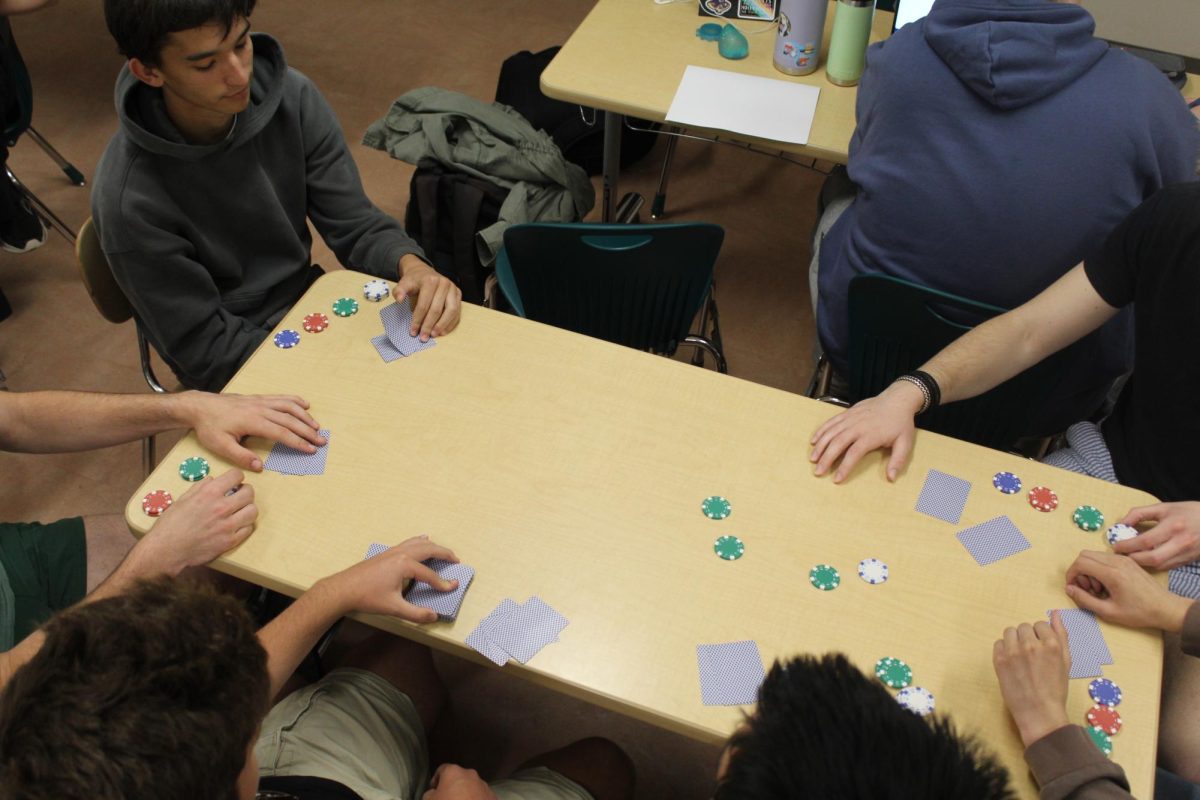
Youth gambling and betting are becoming increasingly popular across the United States, including at San Marin High School, and the trend is starting to raise serious concerns. With the rise of online betting apps and exposure to gambling, more people are being introduced to betting at earlier ages. According to Common Sense Media, around one-third of boys aged 11 to 17 in the U.S. have reported gambling in the past year. This includes activities such as buying lottery or scratcher tickets, playing poker, and engaging in online sports betting. Children are exposed to gambling and betting at ages as young as 9 and start placing bets and wagering money at as young as 11 years old.
“I first heard about gambling from my dad at a young age when he taught me how to play poker and started to see it more in my day-to-day life,” junior Scottie Barksdale said. “As I got older [I started seeing it more] through Fantasy Football, and my cousins going to casinos. [It has become] more popularized among teens.”
One of the main forms of youth betting is sports betting platforms. Companies such as DraftKings, PrizePicks, and FanDuel offer online betting during sports events such as March Madness, Fantasy Football and the Super Bowl. Advertisements for these events appear on social media apps and even in sports broadcasts, making them highly visible to teens and kids.
“[Influencers] play a big role in betting among teens,” Barksdale said. “This is because they are sometimes paid to promote items, and their primary viewers usually consist of kids and young adults. They target the people that they think will be the most easily manipulated. Athletes have a less crucial role in this.”
Online betting companies have age limits and restrictions based on the respective state guidelines about gambling. Users verify their identity and age when they open an account, but some kids will use their parents’ information to create accounts.
“Betting has gotten more popular at school over the past few years because of the introduction of betting apps and the introduction of these apps being disguised as games,” Barksdale said. “It is fairly easy for someone under 18 to access betting apps because there is not a lot of security surrounding the age requirement, as many people can easily lie about their age. However, if someone were to enter a casino and try to bet, for example, it would be much harder. There needs to be more restrictions on betting apps and more security regarding the age to sign up.”
Youth gambling and betting have led to financial consequences in some cases. Saul Malek started gambling when he was a teenager, initially placing a $10 bet on a baseball game, which spiraled into him being $25,000 in debt by the time he was 21. After months of continued losses, he began his recovery in 2019, and currently visits schools to speak about his experience with gambling. Students at San Marin have witnessed the negative side effects of gambling through their friends losing money.
“I had a couple of friends that were down a couple thousand [dollars because of gambling],” senior Miles DeMartini said. “That’s the negative side effect of it. You’re designed to lose. I think people know the consequences of gambling. Gambling has been around for plenty of years. It’s one of the oldest things you do. You know it’s addicting. People still do it.”
Beyond the financial consequences of children gambling, gambling can have lasting impacts on teens’ mental health. A 2025 study found that individuals who start gambling at younger than 18 are 80% more likely to develop gambling addictions later in life. In addition, 96% of people who struggle with a gambling addiction also have another mental illness such as substance abuse, mood disorder, or impulse control disorders. Adolescents are more likely to develop a gambling disorder because the parts of their brain responsible for impulse control and decision-making are still developing.
“It’s a thrill,” DeMartini said. “You go up in money, you [lose] money. [Gambling is] a way to spend your money and spend free time. It’s a hobby and it’s very addicting, so that’s why people are drawn to it.”
In response to the increase in children’s gambling, prevention is being emphasized by psychologists and physicians. Treatment for gambling addictions ranges from therapy to medications. Diagnosis is the first step of treatment, and may require parental intervention, according to the Mayo Clinic.
“It can feel really thrilling at first to experience that dopamine rush of being on the edge of your seat and then winning- especially real money- for the first time,” San Marin parent and teacher at Pleasant Valley Elementary School Erin Chase said. “It’s so easy to get sucked in, but gambling really is structured so that ultimately the house always wins. Every. Single. Time. Betting industries are designed to take your money, not to make money for you. So, I think it’s important to keep that in mind, especially when you’re young and don’t really have disposable income to lose.”
If you or someone you know is dealing with a gambling addiction, call or text the National Gambling Hotline (844) 779-2637 for 24/7 help.