



























Women and girls worldwide are increasingly showing interest in pursuing opportunities in science, technology, engineering, and mathematics, commonly known as STEM. Young girls, starting as early as middle school, are enrolling in STEM-focused extracurricular activities, such as robotics teams and advanced math and science classes, and exploring careers that were previously dominated by men.
According to the National Science Foundation (NSF), the number of women in the United States STEM workforce rose by 31%, reaching 12.3 million in 2025. At the same time, many women are working as doctors, science researchers, data analysts, and engineers, setting a strong example for younger generations.
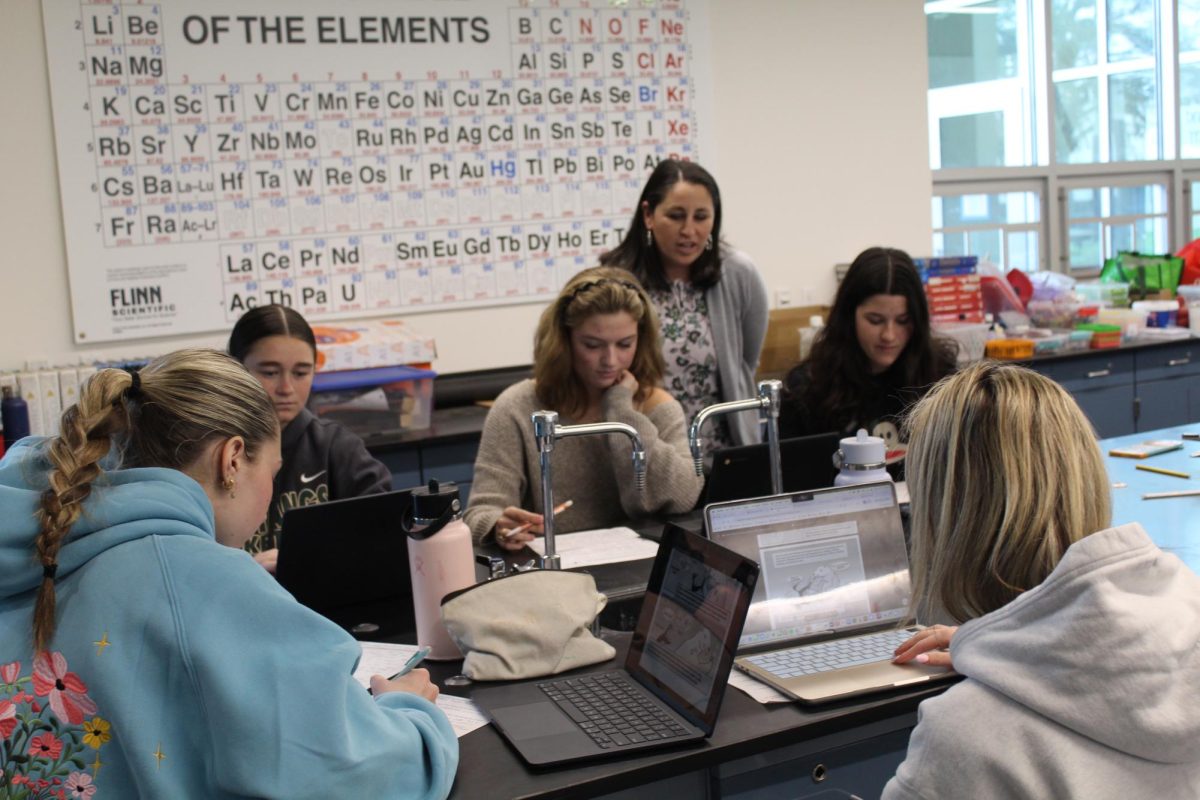
STEM careers are commonly found in hospitals, laboratories, classrooms, engineering firms, and technology companies worldwide. San Marin High School has given students opportunities to explore STEM fields, such as science information nights, STEM-centered courses, and pathways. Science-based clubs have been created by students, giving more girls access to more hands-on STEM-based learning and informing them of STEM-related opportunities.
This growth has become noticeable over the past decade, with the STEM pathways at San Marin being created in 2013. The first pathway to reach San Marin was the Engineering pathway, starting with only 58 incoming freshmen. Over the past decade, two different pathways were brought to San Marin, which consist of a Biotechnology pathway, an Engineering pathway, and an Art and Science pathway (STEAM). As of this year, there are just over 700 STEM students at San Marin, which is a record high number for the program.
Junior Sophia Schiltgen is a member of San Marin’s robotics team, the Science Accelerating Growth and Engagement (SAGE) Club (SAGE), and the STEM Engineering pathway. She feels that the opportunities given at San Marin, such as the robotics team and the STEM pathway, have sparked her interest in possibly pursuing a career in a STEM-related field.
“Once I joined robotics, I realized all of the possibilities that there were for me in STEM work fields,” Schiltgen said.
Many students believe that representation plays a crucial role in their interests.
“When we see women on television or in the news, it kind of permits us or influences us to act in their shoes,” junior Ella Coopersmith, a STEM engineering student, as well as the president and founder of the SAGE club, said.
Teachers and mentors play an important and key role in this progress. Michelle Lafevre-Bernt, Data Specialist at San Marin, helped found the STEM biotechnology pathway and previously worked in the biotechnology industry.
“Just being a woman in STEM, especially a teacher, you’re serving as a strong example or role model [for future generations of people in STEM],” Lafevre-Bernt said.
Reshaping industries and challenging long-held stereotypes is slowly happening as more women step into the STEM industries. This allows for a stronger workforce and diverse scientific perspectives, experiences, and research.