






![“Tanning exposes your skin to [ultraviolet (UV)] light, and UV light is a known carcinogen, which means it can alter your DNA,” Biotechnology and biology teacher Gillian Boyd said. “It can change the sequences of DNA bases. The more exposure you have, the more risk you have to develop [skin] cancer.”](https://smhsponyexpress.org/wp-content/uploads/2026/06/IMG_0071-1200x798.jpeg)










![Remakes [and film adaptations of books] are often criticized for being too repetitive and unnecessary.](https://smhsponyexpress.org/wp-content/uploads/2026/06/IMG_0193-1200x558.jpeg)









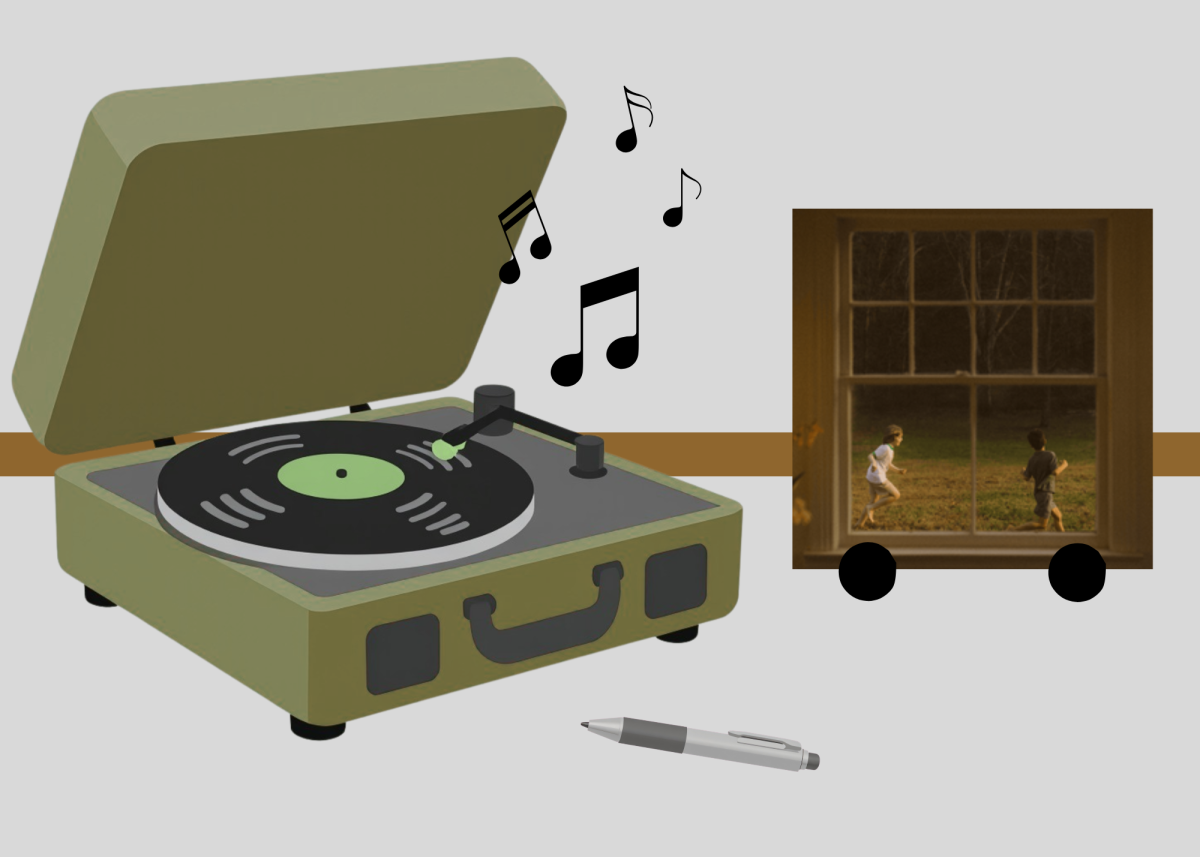



Arguably, the most distinctive and thematically diverse director in the modern day is Wes Anderson. Over his 30-year career, Anderson has produced over 12 films, each identifiable by a single frame. Every one of his films utilizes a cast of characters so unique and exaggerated that they become as memorable as the story itself. His works span numerous genres, including dark comedy, action adventure, stop-motion, and magical fantasy. Each one invokes its own versions of grief, loss, laughter, and joy, despite the characters regularly speaking in deadpan by deliberately showing little to no emotion and being overall impassive.
Another distinctive aspect of his works is his use of sharp, 90-degree camera movements and keeping the camera flat to the background. On top of this, all characters always either show their back, profile, or face to the camera, and make 90-degree turns to change directions, rather than the more modern and far more common free-movement style. Each character is also always put centerstage with minimal background movement, forcing the audience’s focus toward the action.
A great example of this is his series of short films based on Roald Dahl’s short stories. These films strictly follow these camera rules, which at first can feel rigid and almost aggressive. Once the audience has acclimated to the Anderson world, it becomes a gentle reminder of the people behind the film itself and ultimately adds greatly to the overall feel of the films.
Wes Anderson’s style draws the audience to the fact that they are watching a movie, and has a feel very akin to watching theatre. He also follows a color rule known as 60-30-1,0 which divides any given scene into roughly 60% of one color, 30% another, and a final 10%, usually the focus of the scene, and all in one part of the screen. On top of this, he also uses special color grades for each scene, usually a contrast between bright, storybook-like colors and darker, grainier ones. For example, in “The Grand Budapest Hotel,” each scene tends to be made up of bright pinks, purples, and red, with the occasional scenes of white, blue, and yellow. Each color is meant to signify certain emotions and settings, and by the end of the film, the audience is trained on what colors represent what feelings. It is through these techniques that Anderson brings to life his often expressionless characters, telling the story as though it were a children’s book, full of color and life, underlined with deep, complex narratives and emotions, making them digestible for the average viewer.
His films follow a variety of different settings, ranging from 1930s European mountains (“The Grand Budapest Hotel”), to a 1950s United States desert town (“Asteroid City”), to modern-day India (“The Darjeeling Limited”). Each of these films still utilizes his unique style, while each exists in a completely different time period and part of the world.
Some of his most famous works include “Moonrise Kingdom,” “The Grand Budapest Hotel,” “Fantastic Mr. Fox” (Stop-motion), “The Royal Tenenbaums,” and, most recently, “The Phoenician Scheme,” all of which are very good films to start with when watching Wes Anderson.
I find his style to be extremely engaging and, ultimately, draws the audience further into the world he has made, leading to an overall more immersive experience. His style sets him apart from all other directors of our time and has become a very nice refresher from the constant violence and over-the-top theatrics many modern movies rely on. It reminds us that the roots of storytelling and theatre can be found in the script and the words themselves, and that you do not need fancy cameras, big explosions and computer tricks to build an incredible story.